

Choosing a stream after Class 10 or deciding on a career path after Class 12 can feel overwhelming. Many students are interested in multiple subjects, receive different advice from parents, teachers, and friends, and are unsure which option is right for them.
When students hear about a psychometric test, they often fall into one of two groups. Some believe the test will tell them the perfect career to choose. Others assume it is just another online personality quiz with little real value. The truth lies somewhere in between.
A psychometric test is not designed to make decisions for students. Instead, it helps them understand themselves better by assessing factors such as interests, strengths, aptitude, and personality traits. These insights can make career decisions more informed and less based on guesswork.
This is why psychometric tests are increasingly being used for career guidance and educational planning. They help students look beyond marks and consider how their abilities and preferences align with different academic and career options.
In this article, you’ll learn what a psychometric test is, the different types of psychometric assessments, how they help students, when students should take one, and how to use the results effectively when making important career decisions.
What Is a Psychometric Test?
A psychometric test is a scientific assessment used to measure a person’s mental abilities, interests, personality traits, and behavioural preferences. In simple terms, it helps identify how a student thinks, what they are naturally good at, and what kinds of activities or careers may suit them.
Unlike school examinations that measure academic knowledge, psychometric tests focus on understanding the individual. They are designed using research-based methods and standardized questions so that the results can provide meaningful insights about a student’s strengths and preferences.
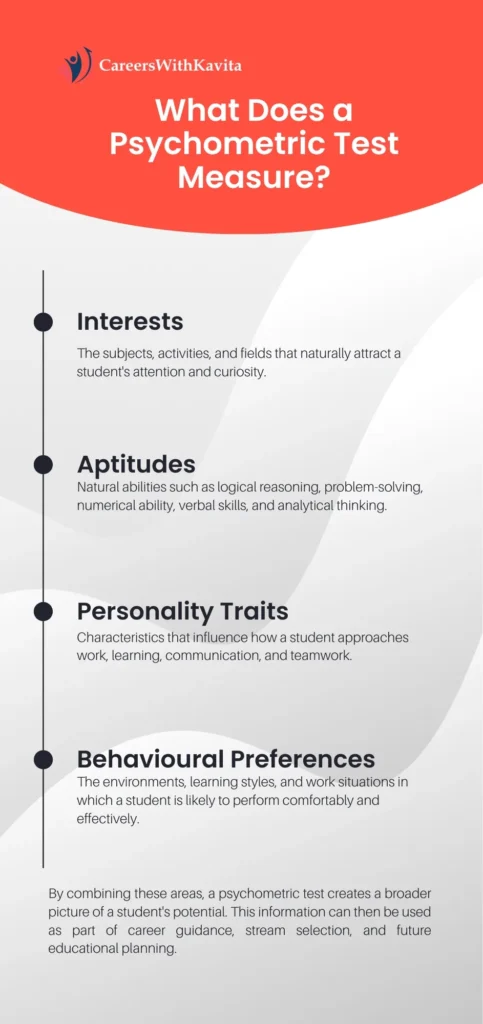
What Does a Psychometric Test Measure?
A psychometric assessment typically measures four key areas:
Interests – The subjects, activities, and fields that naturally attract a student’s attention and curiosity.
Aptitudes – Natural abilities such as logical reasoning, problem-solving, numerical ability, verbal skills, and analytical thinking.
Personality Traits – Characteristics that influence how a student approaches work, learning, communication, and teamwork.
Behavioural Preferences – The environments, learning styles, and work situations in which a student is likely to perform comfortably and effectively.
By combining these areas, a psychometric test creates a broader picture of a student’s potential. This information can then be used as part of career guidance, stream selection, and future educational planning.
Types of Psychometric Tests
Different types of psychometric tests are:
Aptitude Tests
An aptitude test measures a student’s natural abilities and problem-solving skills. These assessments focus on how well a student can understand, analyze, and process information.
Common areas measured include:
- Numerical ability – working with numbers, calculations, and data.
- Verbal ability – understanding and using language effectively.
- Logical reasoning – identifying patterns, solving problems, and thinking critically.
Aptitude tests help identify strengths that may be useful in specific academic fields and career paths.
Interest Assessments
Interest assessments identify the subjects, activities, and career fields that naturally attract a student’s attention.
For example, some students may enjoy working with technology and solving technical problems, while others may be more interested in creative, social, or business-related activities.
These assessments help students explore career options that align with their genuine interests rather than external expectations.
Personality Assessments
A personality assessment examines how a student typically approaches situations, communicates with others, and prefers to work.
It may provide insights into:
- Working style
- Communication preferences
- Decision-making approach
- Behavioural tendencies
Personality assessments do not determine ability. Instead, they help students understand the environments and roles in which they may feel most comfortable and productive.
Comprehensive Career Assessments
Many modern career assessments combine aptitude, interests, and personality into a single report.
This approach provides a broader understanding of a student’s strengths and preferences, which is why comprehensive career assessments are commonly used in career counseling and educational planning. Instead of looking at one factor in isolation, they help create a more balanced view of potential academic and career options.
How Do Psychometric Tests Help Students?
The biggest benefits of a psychometric assessment is that it provides structured insights about a student. Instead of relying only on marks, opinions, or assumptions, students get additional information that can support better academic and career decisions.
Helping Students Understand Their Strengths
Academic performance is important, but marks do not always tell the complete story. A student may perform well in a subject without enjoying it, while another may have strong abilities that are not fully reflected in exam scores.
Psychometric tests help identify natural strengths by measuring areas such as aptitude, interests, and personality traits. This allows students to gain a clearer understanding of where their abilities and preferences may align.
Supporting Better Academic Decisions
Students often face important decisions when choosing subjects, streams, or courses. These choices can influence future educational and career opportunities.
A psychometric assessment provides additional context by highlighting areas where a student’s interests and abilities are strongest. While the results should not be the only factor considered, they can help students evaluate options more thoughtfully and make decisions with greater confidence.
Exploring Suitable Career Paths
Many students are aware of only a limited number of careers, often based on what they see around them. As a result, they may overlook options that match their strengths and interests.
Career assessments can help students explore a wider range of possibilities. Instead of focusing on a single career recommendation, they help narrow down broad career categories that may be worth exploring further.
Reducing Career Confusion
Career decisions can feel overwhelming when there are too many options and conflicting opinions. Psychometric testing brings structure to the process by providing objective information about a student’s profile.
This does not remove uncertainty completely, but it can make decision-making more organized and reduce the guesswork involved in career planning.
What Psychometric Tests Cannot Do
Psychometric tests are useful tools, but they have limitations. They cannot predict future success, guarantee a specific career outcome, or decide what a student should do with their life.
Their purpose is to support decision-making, not replace it. The most effective use of a psychometric test is to combine the results with career counseling, personal goals, academic performance, and real-world exploration before making important decisions.
When Should a Student Take a Psychometric Test?
There is no single “perfect age” for taking a psychometric test. The right time is usually when a student is preparing to make an important academic or career decision and needs greater clarity about their strengths, interests, and future options.
Before Choosing a Stream After Class 10
Selecting a stream is often the first major academic decision a student makes. Choosing between Science, Commerce, Humanities, or other options can be challenging, especially when a student enjoys multiple subjects.
A psychometric assessment can provide additional insights into a student’s interests and aptitudes, helping them evaluate which stream may align better with their strengths and long-term goals.
Before Selecting a Course After Class 12
After Class 12, students are faced with a much wider range of choices, including degree programs, professional courses, and specialized fields.
A career test for students can help identify areas that deserve closer consideration. For example, a student deciding between engineering, business, design, or psychology may benefit from understanding how their interests and abilities align with each option.
When Feeling Confused About Career Options
Many students know what subjects they like but are unsure how those interests connect to careers. Others may receive different suggestions from parents, teachers, and friends, making the decision even more difficult.
In such situations, psychometric testing can bring structure to the process by providing objective information that supports career exploration.
Before Career Counseling Sessions
A psychometric assessment is often most effective when combined with professional guidance. Taking the assessment before a career counseling session gives counselors more information to work with and allows discussions to be based on data rather than assumptions.
This can make career planning conversations more focused, practical, and relevant to the student’s individual profile.
Making the Most of Your Psychometric Test Results
A psychometric assessment can provide valuable insights, but the report itself does not make decisions. The real value comes from how students use the information to explore options, ask better questions, and plan their next steps.
Use Results as a Starting Point
The results of a psychometric test should be viewed as a guide rather than a final verdict. They can highlight strengths, interests, and areas worth exploring, but they should not be treated as instructions that must be followed.
Students should use the findings as a starting point for understanding themselves better and evaluating different academic and career options.
Discuss Results with a Career Counselor
A career assessment report often contains detailed information that may not be easy to interpret on your own.
Discussing the results with a qualified career counselor can help students understand what the findings mean in practical terms. Counselors can also explain how different strengths, interests, and personality traits connect to educational pathways and career opportunities.
Research Recommended Career Paths
If a psychometric assessment identifies certain career fields as a good match, students should take time to learn more about them.
Researching job roles, required qualifications, future opportunities, and day-to-day responsibilities can help determine whether a particular career path is genuinely appealing and realistic.
Combine Insights with Personal Goals
Psychometric test results are only one part of the decision-making process. Personal goals, academic performance, financial considerations, and individual circumstances also matter.
The most effective career planning happens when students combine assessment insights with their own aspirations and informed research. This creates a more balanced approach than relying on any single report or recommendation.
Take the First Step Toward Better Career Decisions
Understanding your strengths, interests, and aptitude can make career decisions much easier. A psychometric assessment provides valuable insights that can help you choose the right academic and career path with greater confidence.
If you’re unsure about your next step, connect with our career guidance team. Simply fill out the form on our Contact Page, and we’ll help you schedule a professional psychometric assessment and counseling session.
Frequently Asked Questions
Are psychometric tests accurate?
A psychometric test can provide reliable insights when it is scientifically developed and administered correctly. However, its accuracy depends on the quality of the assessment and how honestly the student answers the questions.
Can a psychometric test tell me which career to choose?
No. A psychometric test cannot choose a career for you. It helps identify your interests, strengths, and preferences so you can make more informed decisions about possible career paths.
What is the difference between an aptitude test and a psychometric test?
An aptitude test measures specific abilities such as numerical, verbal, or logical reasoning skills. A psychometric test is broader and may assess aptitude, interests, personality traits, and behavioral preferences together.
At what age can students take a psychometric test?
Many students take psychometric assessments between Classes 8 and 12, when they start thinking about subject choices and career options. The most suitable age depends on the purpose of the assessment and the student’s stage of education.
How long does a psychometric assessment take?
The duration varies depending on the assessment. Most student career assessments take between 30 minutes and 90 minutes to complete, followed by a review of the results.
Should parents be involved in reviewing the results?
Yes, especially for younger students. Parents can help interpret the findings, discuss career options, and support decision-making. However, the student’s interests, strengths, and aspirations should remain central to the discussion.