
Many students believe career mistakes happen when they choose the wrong degree or college. In reality, most career mistakes students make happen much earlier. They often begin with assumptions, limited research, delayed exploration, or decisions influenced more by others than by informed thinking.
The challenge is that career planning for students is often treated as a one-time decision rather than a process of learning and discovery. As a result, students may focus on finding the “perfect” career instead of understanding their strengths, interests, and opportunities.
In this article, we’ll look at the most common career mistakes students make, why they happen, and what you can do differently to make better career choices for students and their future.
Top 10 Common Career Mistakes Students Make
1. Choosing a Career Based Only on Marks
Many students assume that being good at a subject automatically means it is the right career for them. While marks indicate academic strength, they do not guarantee career fit. A good career choice should also consider your interests, strengths, work preferences, and long-term opportunities. Instead of choosing based on marks alone, focus on understanding the work behind the profession.
2. Following Trends Instead of Understanding the Work
Popular careers often attract students because of high salaries, social media influence, or market buzz. However, many choose a field without understanding what the job actually involves. Before committing to a future career, learn about the day-to-day responsibilities, required skills, and challenges to ensure it genuinely suits you.
3. Waiting Too Long to Explore Career Options
Many students delay career exploration until they are close to college admissions or graduation. This often leads to rushed decisions and unnecessary stress. Exploring different careers early gives you time to understand your interests, gain exposure, and make better educational and career planning decisions.
4. Focusing Only on Degrees and Ignoring Skills
A degree can open doors, but skills help you succeed once they are open. Employers increasingly value employability skills such as communication, teamwork, and problem-solving. Along with academic qualifications, focus on developing workplace skills and transferable skills that remain valuable across industries.
5. Letting Others Make Career Decisions for You
Parents, relatives, and friends can offer useful advice, but they should not make the final decision. When career choices are driven entirely by others, students often lose sight of their own career goals and personal interests. Seek guidance, but take responsibility for your own direction.
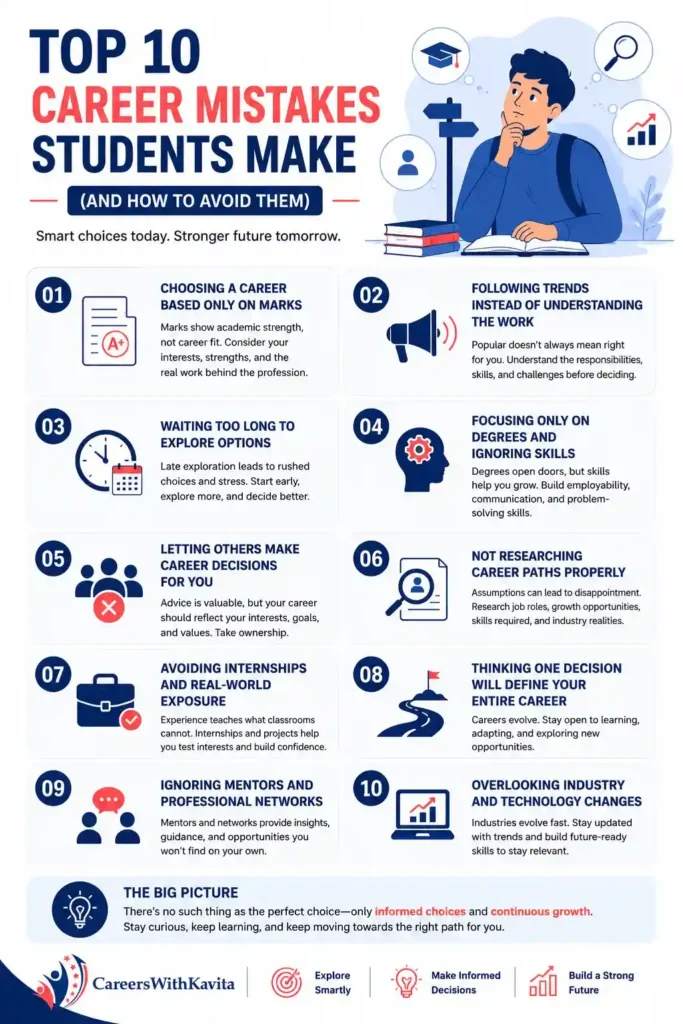
6. Not Researching Career Paths Properly
Many students choose a career path based on assumptions rather than facts. As a result, they may discover later that the work is very different from what they expected. Researching job roles, growth opportunities, required skills, and industry realities helps you make informed decisions and avoid unnecessary surprises.
7. Avoiding Internships and Real-World Exposure
Classroom learning is important, but practical experience provides a different perspective. Internships, projects, and volunteering help students understand workplace expectations and test their interests. Even a short internship can provide valuable insights that make future career decisions more realistic and informed.
8. Thinking One Decision Will Define Your Entire Career
Many students believe they must make the perfect choice the first time. In reality, careers evolve through experience, learning, and changing opportunities. Instead of chasing the perfect decision, focus on making the best decision you can today while remaining open to future career development.
9. Ignoring Mentors and Professional Networks
Students often underestimate the value of mentorship and networking. Learning from professionals, alumni, and experienced mentors can provide practical insights that are difficult to find online. These conversations can help you avoid mistakes, gain clarity, and discover opportunities you may not have considered.
10. Overlooking Industry and Technology Changes
Industries change constantly, and the skills employers need today may not be the same tomorrow. Students who stay aware of job market trends and emerging future skills are better prepared for long-term success. Adaptability and continuous learning are becoming essential career advantages.
What Most Advice Gets Wrong About Career Planning
A lot of career advice encourages students to find their passion, choose the perfect career, and stick with it for life. While this sounds appealing, it often creates unnecessary pressure.
One of the biggest career planning mistakes is believing that a single decision will determine your future. In reality, careers evolve as you gain experience, develop new skills, and discover new interests.
Good career decision making is not about predicting the future perfectly. It is about learning, exploring, and making informed choices with the information you have today. Effective student career guidance should help students stay curious and adaptable rather than searching for one perfect answer.
The goal is not to make the right choice once. The goal is to keep making better choices over time.
What Actually Matters Instead
Understand Yourself Before Choosing
Before selecting a career, spend time understanding your strengths and interests. Knowing what you enjoy, what motivates you, and where your abilities naturally fit can help you make more informed decisions. Self-awareness does not guarantee the perfect career, but it provides a stronger foundation for choosing one.
Build Skills Alongside Qualifications
Degrees and certifications are important, but they are only part of the equation. Employers also look for transferable skills and employability skills such as communication, teamwork, adaptability, and problem-solving. These skills remain valuable across industries and can support long-term career success.
Explore Before Committing
Many students feel pressured to decide quickly, but career exploration is often more valuable than rushing into a decision. Internships, projects, volunteering, and conversations with professionals can provide practical insights that help you understand different career paths before making a commitment.
Seek Guidance Early
You do not have to figure everything out alone. Quality career guidance and mentorship can help you avoid common mistakes, understand available opportunities, and make decisions with greater confidence. Learning from experienced professionals often provides perspectives that research alone cannot.
Stay Adaptable
No one can predict exactly how their future career will unfold. Industries change, technology evolves, and new opportunities emerge. Students who stay curious, continue learning, and adapt to change are often better positioned for professional growth over the long term.
In Essence
Career success is rarely determined by a single decision. Most mistakes happen because students lack awareness, exposure, or reliable information—not ability.
The key to better career planning for students is to explore, learn, and adapt over time. By understanding your strengths, building relevant skills, and staying open to new opportunities, you can make more confident decisions and support your long-term career development.
The goal is not to find the perfect path, but to keep moving toward the right one.
Frequently Asked Questions
How early should students start career planning?
Students should begin exploring career options as early as possible, ideally during secondary school. Early exploration provides more time to understand interests, develop relevant skills, and make informed academic and career decisions.
Can choosing the wrong course ruin a career?
No. While a course can influence your opportunities, it does not permanently determine your future. Many professionals change industries, acquire new skills, or pursue different career paths as their interests and goals evolve.
What is the biggest career mistake students make?
One of the most common mistakes is making career decisions without sufficient research or self-awareness. Choosing a path based solely on marks, trends, or external pressure can lead to dissatisfaction and confusion later.
Are internships important for career growth?
Yes. Internships provide practical exposure, help students understand workplace expectations, and allow them to test career interests before making long-term commitments. They also help build skills and professional confidence.
How can students identify the right career path?
There is rarely one perfect career path. Students should evaluate their interests, strengths, values, and goals while exploring different opportunities through research, projects, internships, and conversations with professionals.
Should students follow passion or job opportunities?
Neither should be considered in isolation. A good career decision balances personal interest with realistic opportunities, required skills, and long-term growth potential. The strongest choices usually consider both factors together.